 Jobzbrv
Grace periods, lapses and reinstatement explained so a missed payment does not cost you your cover.
The grace period
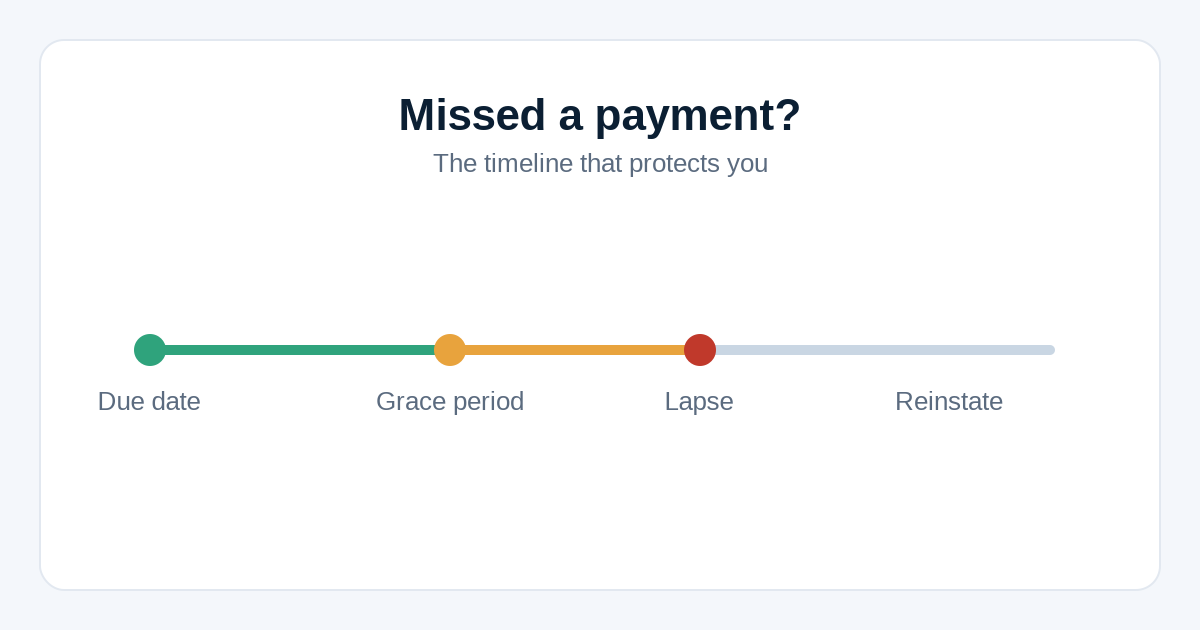
Most policies give 30 or so days after a due date during which cover stays active. Pay inside it and nothing changes — no penalty, no questions. The exact length varies by policy and country, so check your documents rather than relying on the average.
What a lapse means
If the grace period ends without payment, the policy can lapse and your family would no longer be protected. A lapse is not a pause — legally the contract has ended. This is the outcome every other step on this page exists to prevent.
Reinstatement: bringing it back
Many insurers let you bring a lapsed policy back within a window — often months, sometimes years — by paying overdue premiums and sometimes answering health questions again. If your health has worsened since you first applied, the insurer may reprice or decline, so reinstatement is not guaranteed. Act quickly: the longer you wait, the harder it gets.
Automatic premium loan: the safety net you set up once
On permanent policies with cash value, you can usually enable an automatic premium loan: if a payment is missed, the insurer borrows against your cash value to pay it. It keeps the policy alive while you sort things out, though the loan accrues interest. Check whether your policy offers it and switch it on before you need it.
Prevent it
Set up automatic payments, keep your bank details current and calendar yearly renewals. Most lapses are administrative — an expired card, a changed bank account — not financial. A five-minute check once a year prevents almost all of them.
If money is tight
Talk to the insurer before you miss anything. Options can include lowering the cover, changing the schedule or using cash value on permanent policies. Insurers would rather keep a paying customer at a lower premium than process a lapse.
Compare before restarting
A brand new policy at an older age may cost more, so reinstating is often cheaper. Run the numbers both ways before you let a lapsed policy go — the original was priced at a younger, healthier you.
Frequently asked questions
How long is the grace period?
Often around 30 days, but it varies by policy and country. Check your own documents rather than assuming.
Will my family be covered during the grace period?
Usually yes. If death occurs inside the grace period, the insurer typically pays the claim minus the overdue premium.
Can I get my policy back after it lapses?
Often, within a reinstatement window. You will pay the overdue premiums and may need to answer health questions again.
What is an automatic premium loan?
On permanent policies with cash value, the insurer can borrow against that value to pay a missed premium automatically — if you enabled it.
Is reinstating cheaper than buying new?
Usually. A new policy at an older age almost always costs more than reinstating the old one.
General information only, not financial or insurance advice.