 Jobzbrv
What life insurance is, who needs it and how the main types differ, in everyday language.
What it actually is
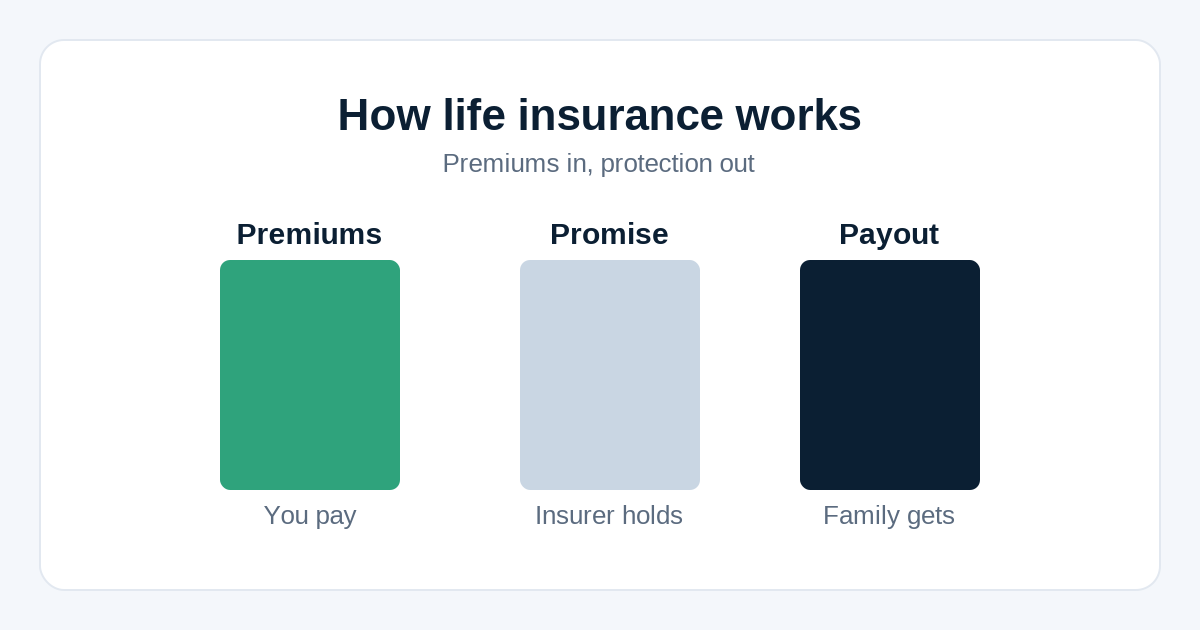
Life insurance is an agreement: you pay regular premiums, and if you die while the policy is active, the insurer pays a lump sum to the people you name. That money is usually tax-friendly and can be spent on anything — mortgage payments, school fees, daily bills or simply replacing the income your family counted on.
Who should think about it
Anyone with people who rely on their income or with debts that would pass to others. That includes parents, homeowners with a mortgage, and anyone supporting a partner or ageing parents. Single people with no dependants and no debts often need little or none — a policy with nobody to protect is an unnecessary bill.
A useful test: if you died tomorrow, would anyone face a financial hole they could not fill? If the answer is yes, some cover is worth pricing.
The two big families
Term policies last for a fixed number of years and are inexpensive. You choose 10, 20 or 30 years, pay a level premium, and the policy pays out only if you die within the term. Permanent policies, such as whole life, last for life and cost more because they include a savings feature called cash value.
For the same payout, a whole life premium can cost many times more per month than term. Beginners usually start with term because the need it covers — raising children, paying off a house — has an end date.
The words you will meet
The death benefit is the payout. The premium is what you pay, usually monthly. The beneficiary is who receives the money — name them carefully and review the choice yearly. Underwriting is the insurer's review of your health and risk, and it sets your price. A rider is an optional add-on, and the grace period is the short window after a missed due date when cover still holds.
What it costs, roughly
Price depends on age, health, amount and term length. A healthy non-smoker in their early 30s might pay the price of a weekly coffee for a meaningful term policy, while the same cover at 50 could cost several times more. Tobacco use, risky hobbies and some health conditions raise the price. The Monthly Premium Estimator gives a feel for the numbers before you talk to anyone.
How to start
Work out your gap with the How Much Cover calculator, decide how long you need protection, then collect a few quotes. Compare the total cost over the whole term, not just the monthly figure, and check the exclusions section of any policy — suicide clauses in early years and undisclosed health facts are the usual claim-delay culprits.
A reminder
Always read the exclusions and keep your details up to date so a claim can be paid without delays. Update beneficiaries after big life events, and tell the insurer about changes they ask about.
Frequently asked questions
How much life insurance do I actually need?
A common method is to add up debts, years of income to replace, mortgage balance and education costs, then subtract what you already have. Try the How Much Cover calculator for a worked estimate.
Is term or whole life better for beginners?
Most beginners with temporary needs, like a mortgage or young children, start with term. It is simpler and far cheaper for the same payout.
At what age should I buy life insurance?
There is no single right age, but buying while young and healthy usually locks in a lower price. Waiting tends to raise the cost.
Can single people skip life insurance?
Often yes. With no dependants and no debts that would pass to others, there may be little for a policy to protect.
What is underwriting?
It is the insurer's review of your health, lifestyle and risk factors. It decides your price class and whether you are approved.
General information only, not financial or insurance advice.